New Year’s Day Motuni in Asakusa: The Ultimate Winter Comfort Food
Happy New Year to everyone reading this blog 🎍
This blog started in December last year with the goal of sharing real Asakusa experiences for inbound travelers.
In 2026 as well, I’ll continue to share what I actually see, feel, and experience in Asakusa — captured through my own camera and smartphone as a photographer — so you can get a true sense of what it’s like on the ground.
So Many Food Stalls During New Year
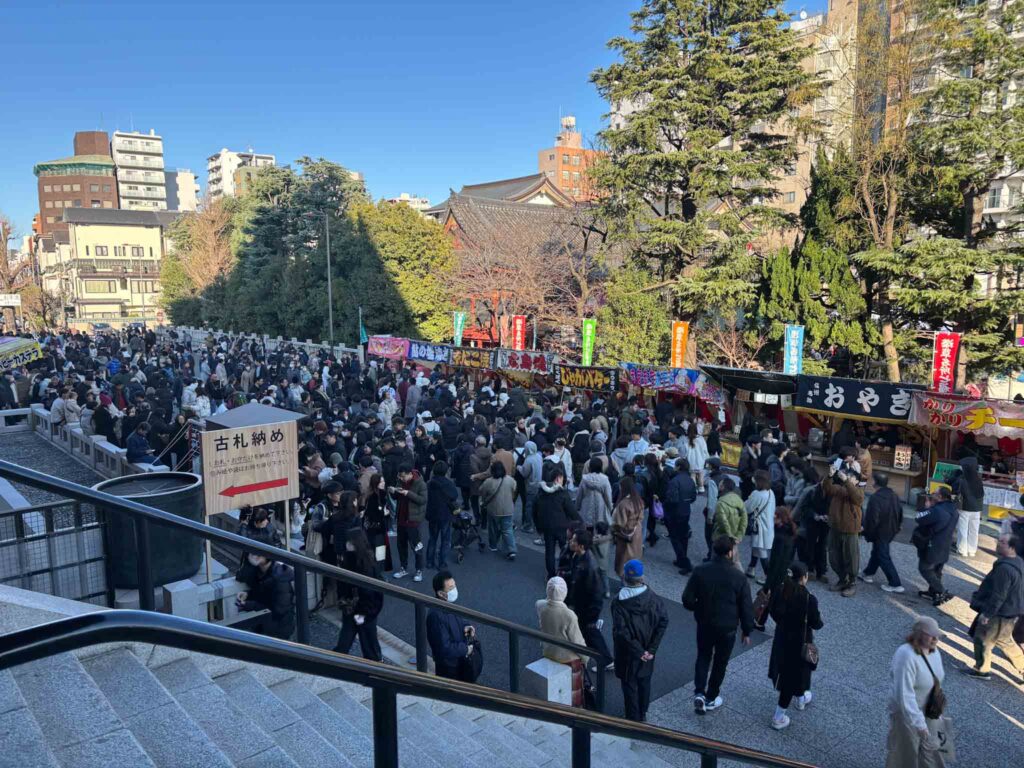
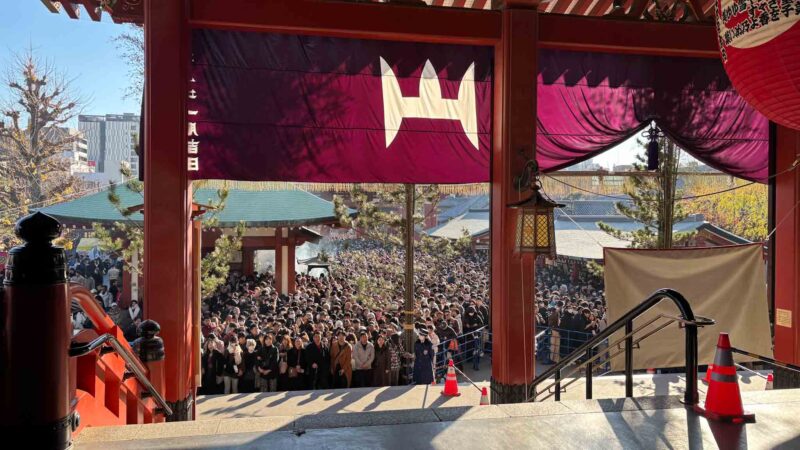
After throwing a coin as an offering and praying, I realized I had been surrounded by crowds for almost an hour.
Naturally, I was hungry — and a little stressed — so it was time to find something to eat at the food stalls.
I usually love sweets, but my body was cold, and this time I wanted something warm and filling rather than dessert.
I forgot to take photos of everything, but honestly, this was the largest number of food stalls I’ve ever seen in Asakusa.
They were packed tightly around the main hall, and even inside Asakusa Shrine, stalls lined the paths wall to wall.
New Year’s season in Asakusa is on a completely different level.
Motuni Wins, No Question
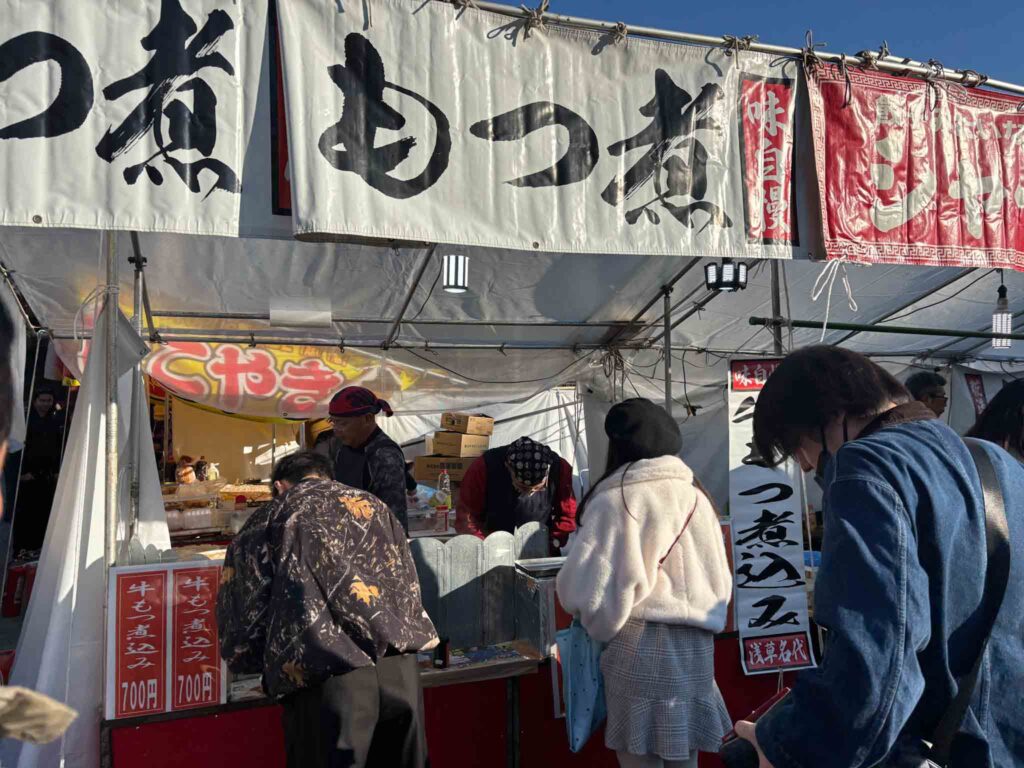
I noticed people nearby enjoying okonomiyaki, and for a moment I thought, “That looks good.”
Takoyaki was tempting too — I had seen it earlier.
Then I spotted a sign for motuni (Japanese pork offal stew).
I really love motuni, but I rarely get to eat it at home. My child doesn’t like it (are there even kids who love motuni?), so I almost never cook it myself.
That made the decision easy.
Something warm, hearty, and perfect for the cold — motuni it is.
Interestingly, the neighboring stall had a much longer line.
I wondered what they were selling… turns out it was gyoza.
Gyoza really is popular.
Personally, though, I’ll choose motuni every time.
A Heaping Bowl of Motuni That Warms You to the Core
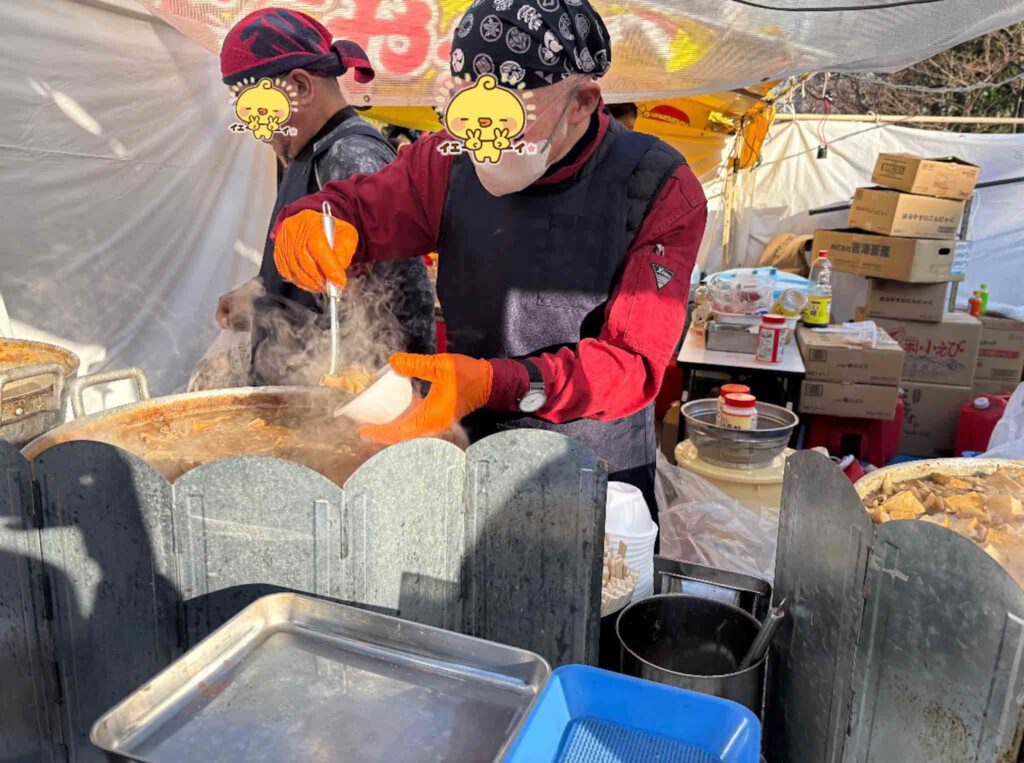
I lined up at the motuni stall — only two groups ahead of me.
That alone made me happy because I was starving and wanted to warm up as quickly as possible.
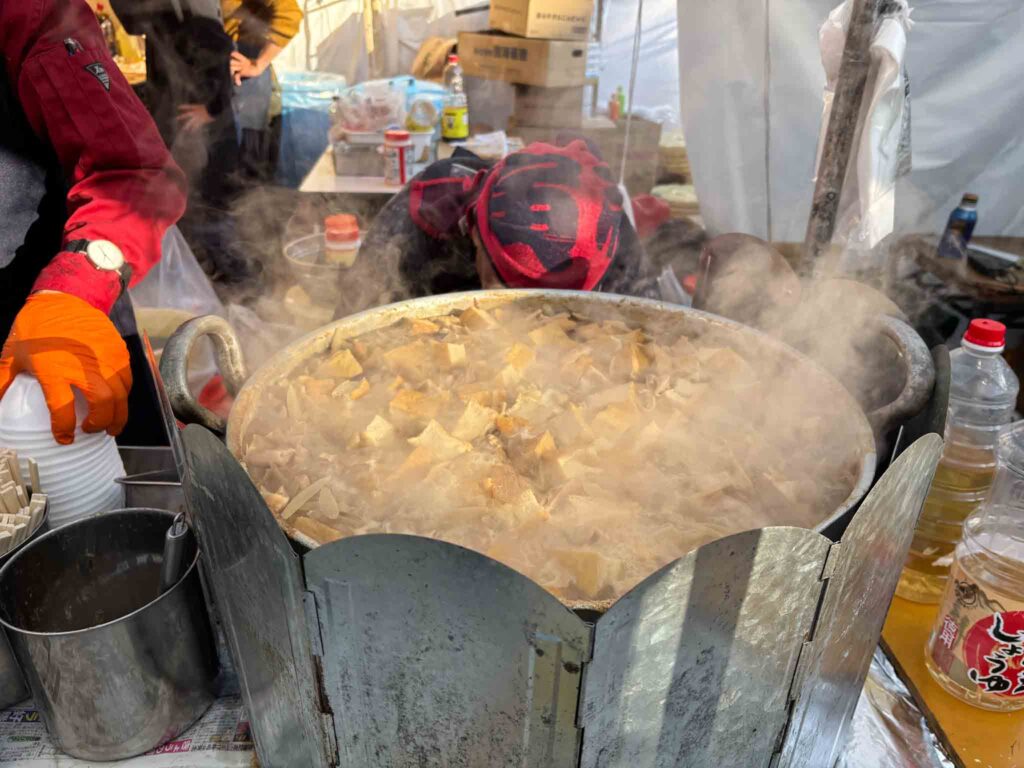
Behind the stall was a huge pot filled with motuni.
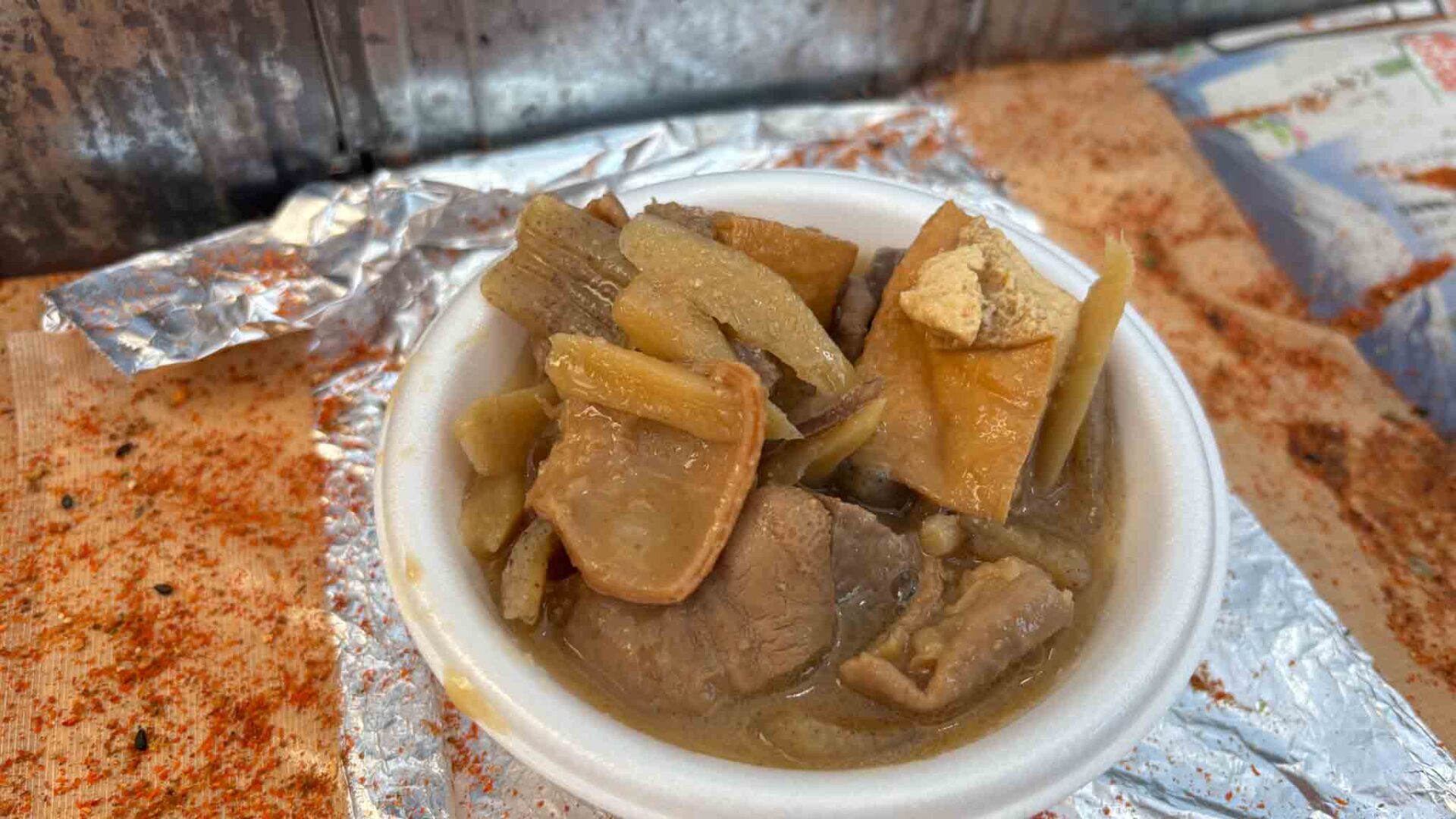
The deep, rich color might look a bit unhealthy at first glance… but that’s exactly how you know it’s going to be delicious.
One bowl costs 700 yen, and like most stalls in Asakusa, it’s cash only, so don’t forget to bring cash when you visit.
When I handed over the money, the man serving carefully scooped the motuni into a bowl on a tray.
And when I say carefully — I mean generously.
The bowl was already full, yet he kept adding more ingredients, then topped it off with extra broth until it was almost overflowing.
(As expected… I spilled a little later 🤣)
Even though New Year’s is extremely busy, he treated each customer warmly and with care.
That kindness made me feel not just physically warm, but genuinely happy.
Thank you, sir.
Shichimi Chili Pepper Is Self-Service
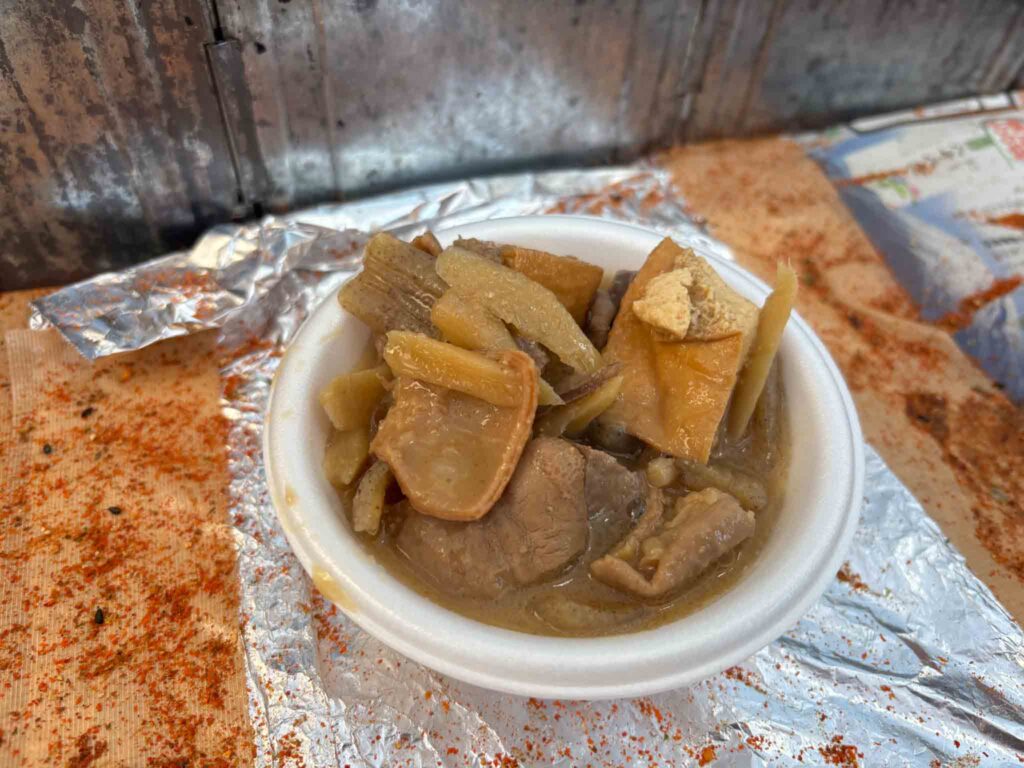
Look at this bowl — it’s seriously overflowing.
As I’m writing this now and looking at the photo, I already want to eat motuni again.
That said… diving back into the New Year crowds of Asakusa does take some courage 🤣
I also love the scattered shichimi chili pepper around the stall.
It feels very “New Year in Japan.”
Things don’t need to be perfectly clean to feel right — this slightly messy atmosphere is exactly what makes Japanese New Year food stalls so charming.
There’s no designated eating area, so people just stand nearby and eat wherever they can, especially around Asakusa Shrine.
The motuni was hotter than I expected, but I was so hungry that I couldn’t wait.
Eating it while saying “hot, hot” between bites somehow made it even more delicious.
⸻
If you visit Japan during New Year’s, please try motuni at least once.
Thank you so much for reading!
Date photographed: January 1, 2026
Location: Sensoji Temple, Asakusa
New Year’s Day in Asakusa 2026 #1 Tobu Asakusa Station Before Entering the Crowd
Asakusa Ningyoyaki: Watching Fresh Ningyoyaki Being Made on Nakamise Street
Two Strollers I Noticed in Asakusa
Takoyaki Stalls at Senso-ji: What Asakusa Looks Like at the End of the Year