Omikuji at Sensoji Temple: How to Enjoy Japan’s Famous Fortune Slips
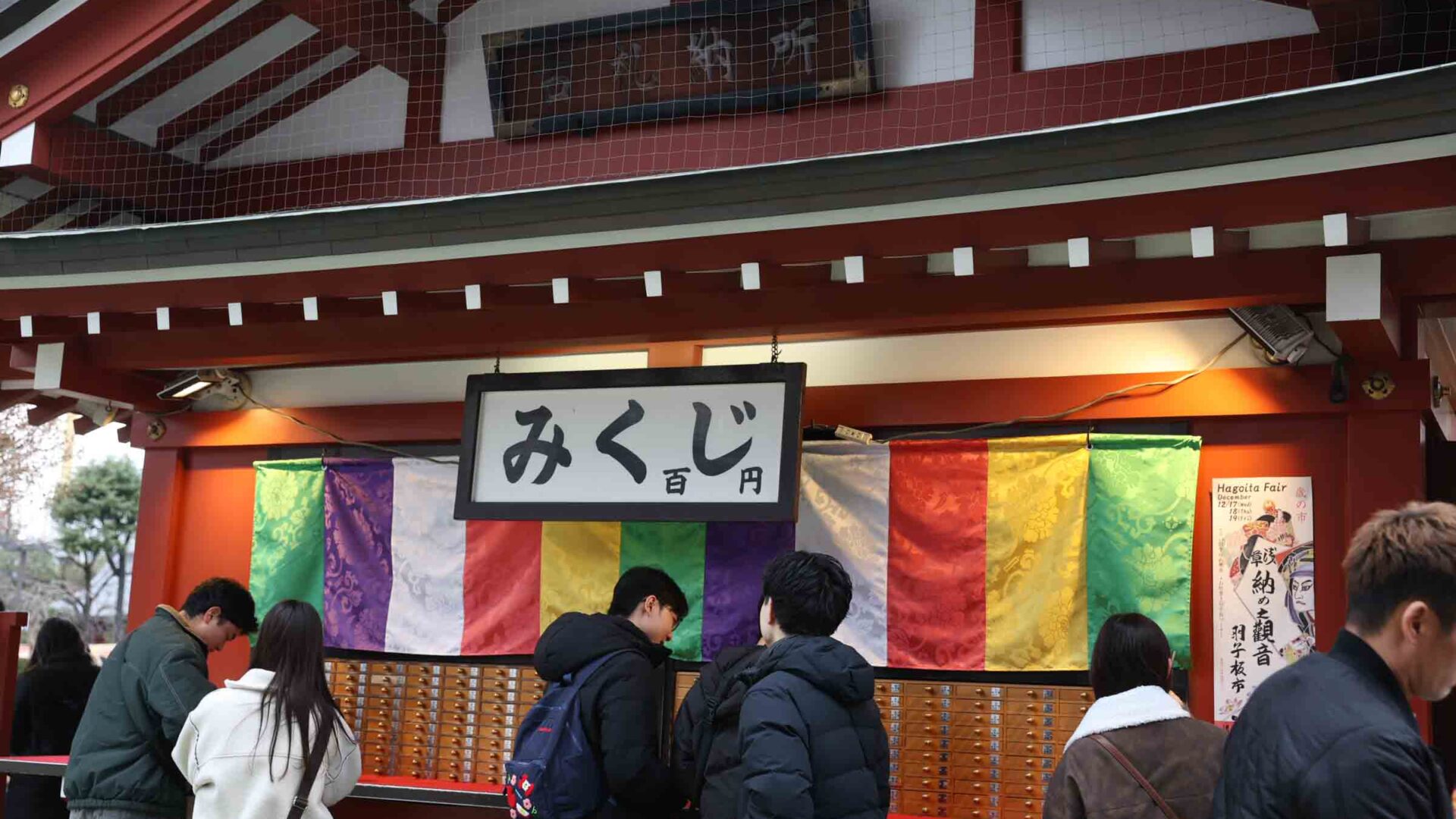
One of the most iconic ways to enjoy Sensoji Temple is by trying omikuji, a traditional Japanese fortune slip.
Most people have probably experienced it at least once in their life.
In this article, I’ll explain where to find omikuji at Sensoji, how to draw one, what to do after, and the proper etiquette.
Where to Find Omikuji at Sensoji
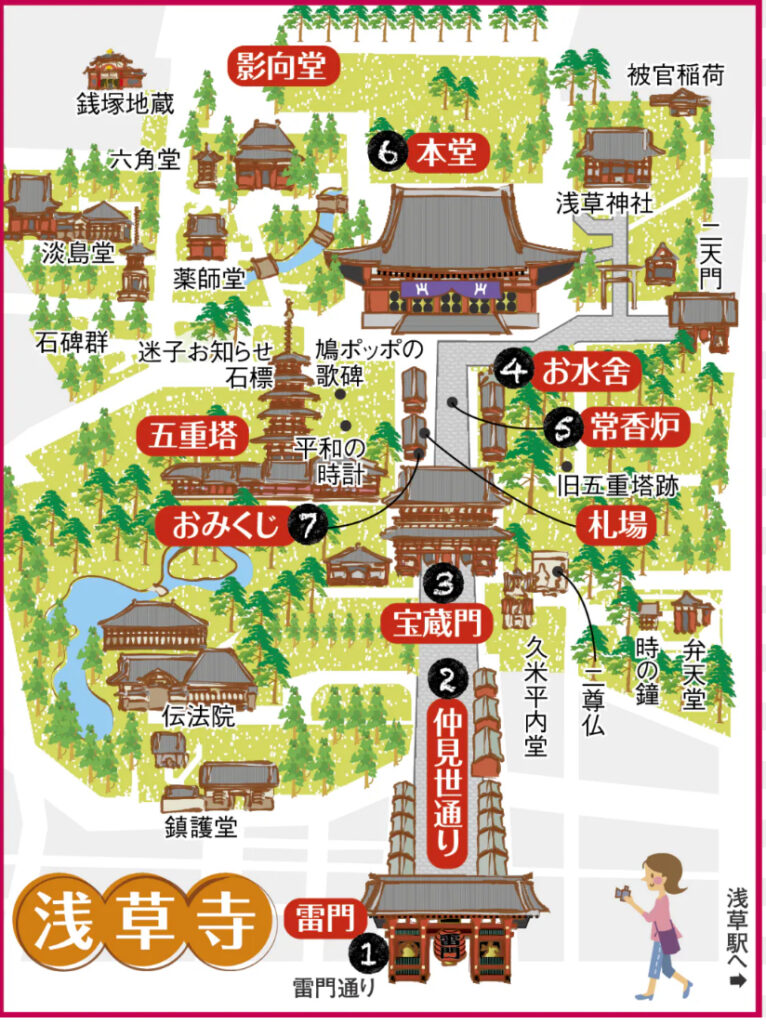
There are several places where you can draw omikuji at Sensoji Temple, but the easiest one to find is located immediately after passing through the Hozomon Gate.
On both the left and right sides, you’ll see small buildings with brightly colored noren curtains in purple, white, yellow, red, and green.
The vivid colors make them easy to spot.
When I visited, this area stood out the most, and many people naturally gathered here to try their luck.
How to Draw an Omikuji

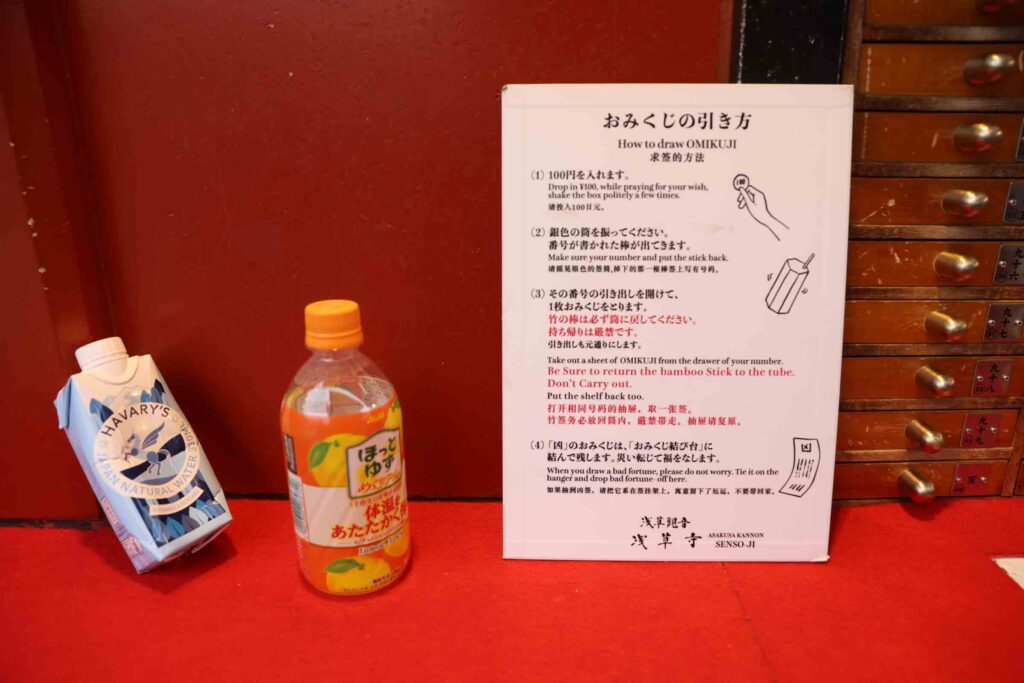
An omikuji costs 100 yen per try, and cash only is accepted.
First, put the coin directly into the cylindrical box.
Then shake the box until a thin stick—similar to a chopstick—with a number written on it comes out through a small hole.
Nearby, you’ll find small drawers with numbers on them.
Open the drawer that matches your number and take out the paper fortune inside.
The fortune includes predictions about health, work, relationships, and other aspects of your life.
If You Get “Kyo” (Bad Luck), Tie It to the Rack

Omikuji results are written clearly, such as Great Blessing (Daikichi), Middle Blessing (Chukichi), or Small Blessing (Shokichi).
The result considered the worst is “Kyo” (bad luck).
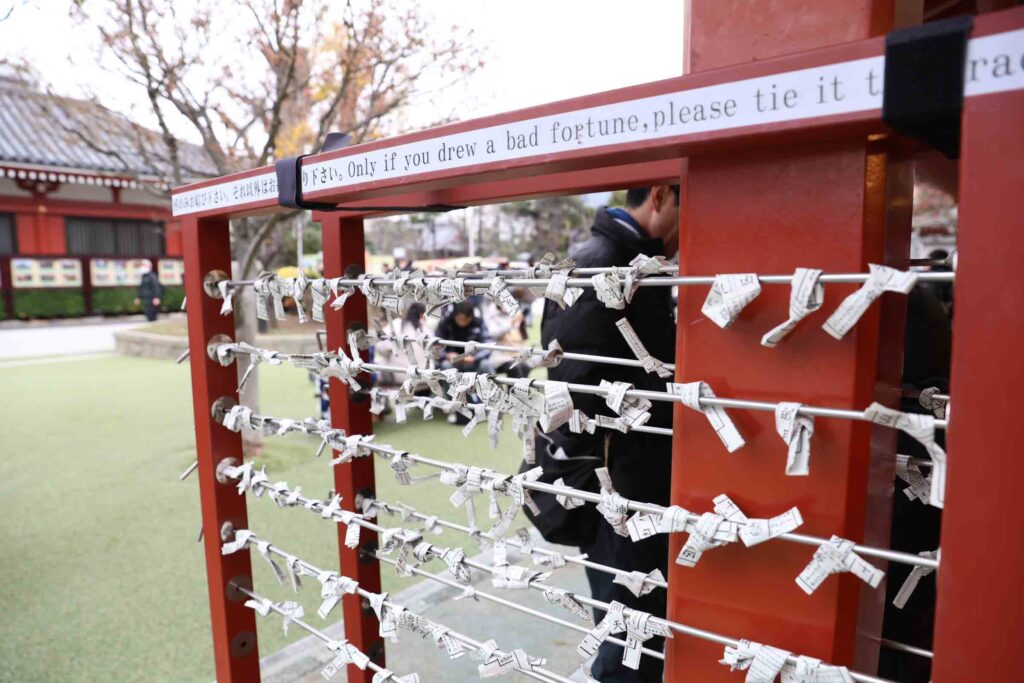
If you draw Kyo, it is customary to tie the fortune to the designated omikuji rack inside the temple grounds.
On the other hand, tying fortunes other than Kyo is traditionally discouraged, so please be careful.
Why Do People Tie Their Omikuji?
Sensoji is famous for having a relatively high chance of drawing Kyo, but Kyo does not mean something bad will definitely happen.
Instead, it is considered a message from the gods saying:
“Your luck is low right now, so be cautious with your actions.”
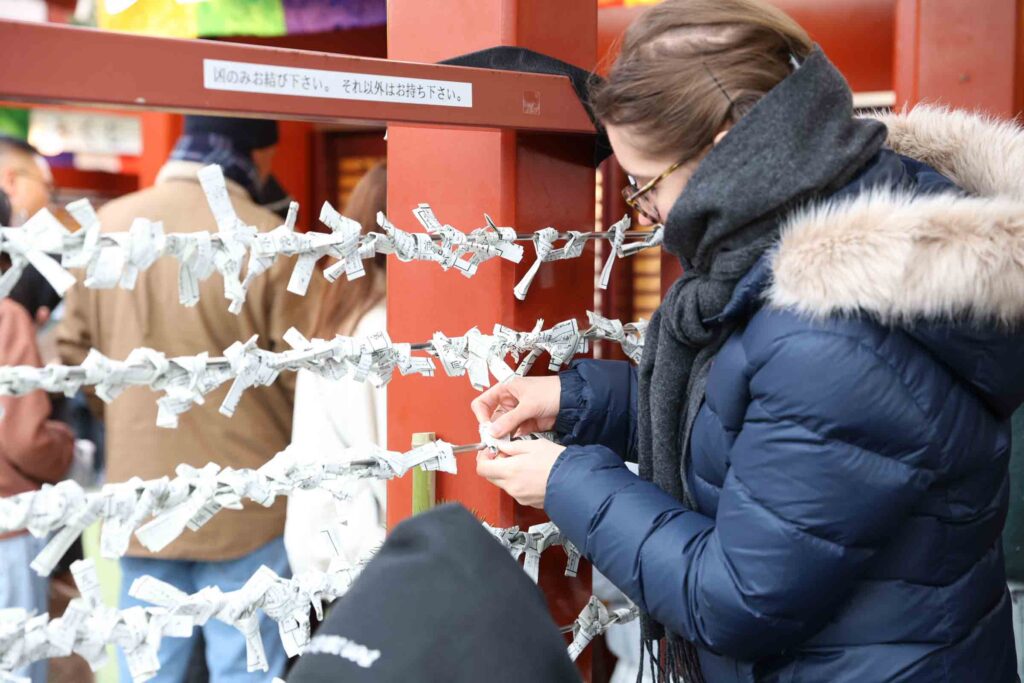
By tying the omikuji to the temple rack, people symbolically leave their bad luck behind and entrust it to the gods.
In fact, many Kyo fortunes are tied to the racks at Sensoji, and I saw several visitors doing this during my visit.
Enjoy the Omikuji Experience at Sensoji
When you visit Asakusa, be sure to experience Japan’s unique omikuji culture for yourself.
It’s not just about luck—it’s a meaningful cultural ritual that adds depth to your visit to Sensoji Temple.
The Best Place to Buy Souvenirs in Asakusa: You Can’t Go Wrong with Nakamise Street