While observing Asakusa as usual, something unexpectedly caught my eye.
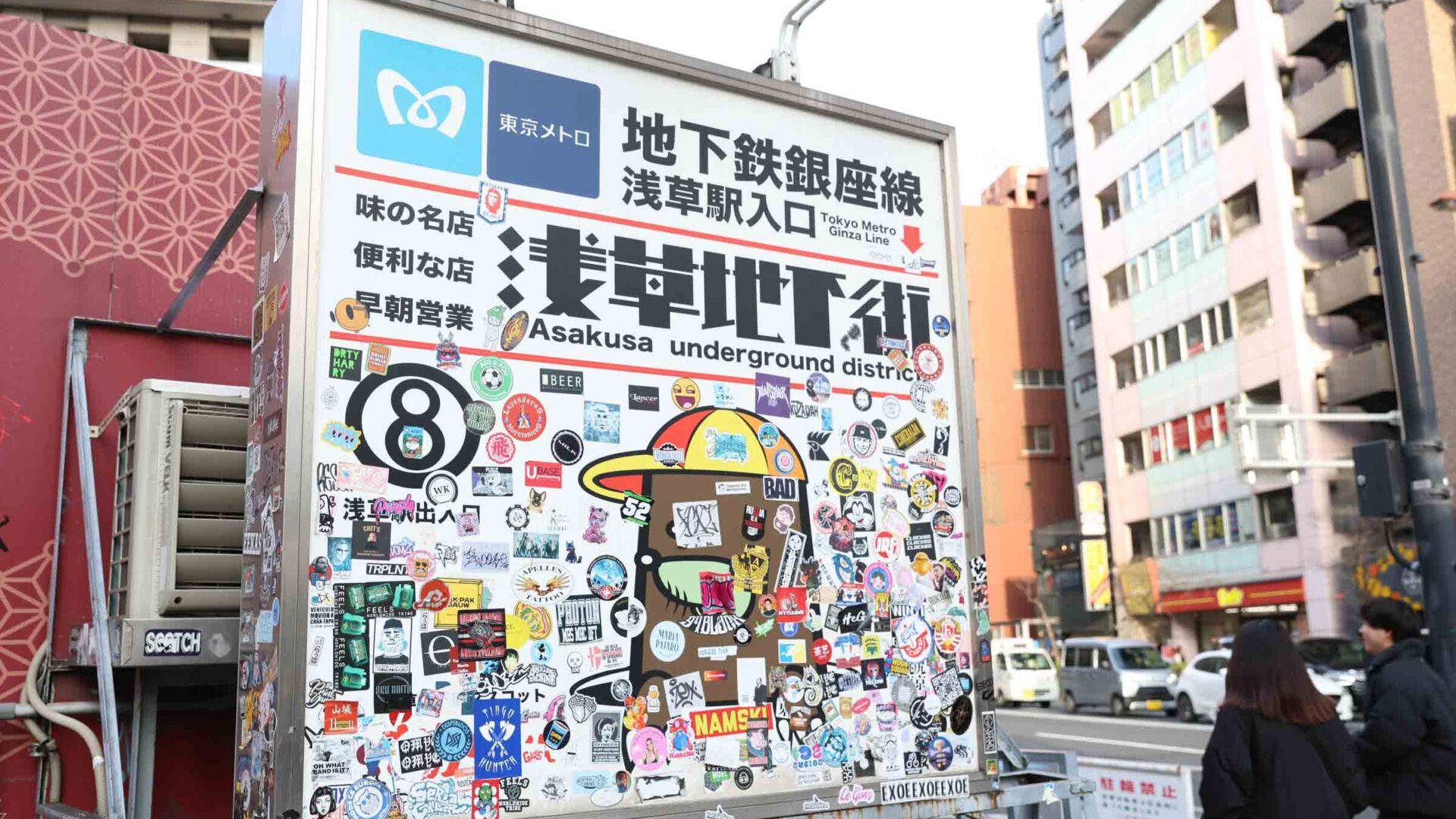
It was the signboards covered with stickers, placed almost carelessly.
At first glance, they felt out of place.
In this article, I want to write about what these stickers might mean,
and how my feelings toward them slowly changed.
Stickers at the Ginza Line Entrance
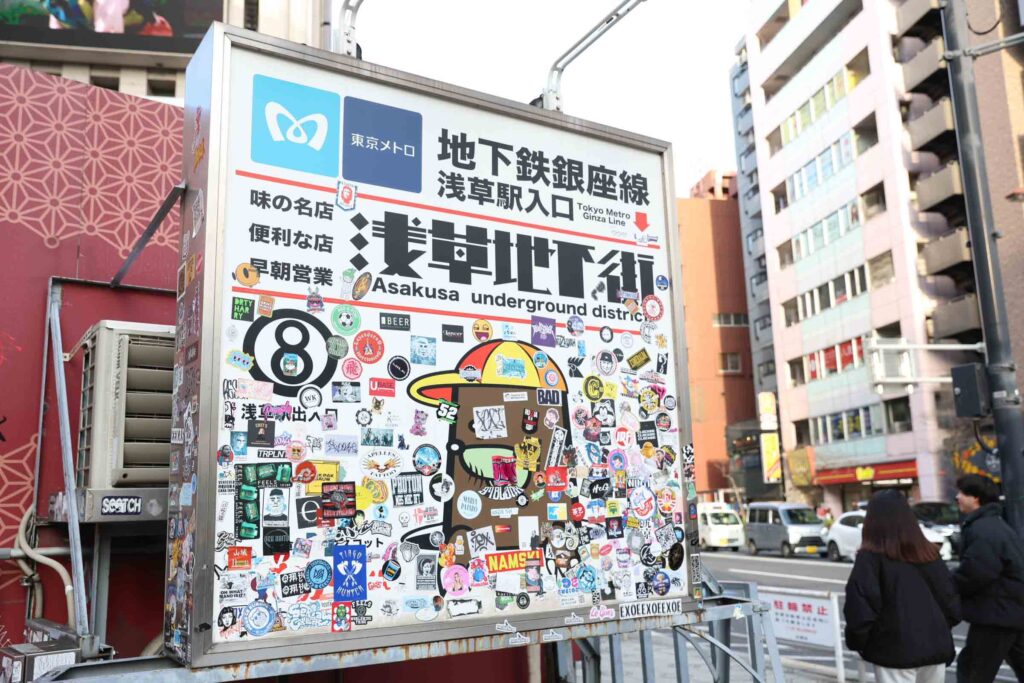
The first time I noticed them was on December 26, 2025,
at the sign near the Tokyo Metro Ginza Line entrance.
My immediate reaction was,
“Wow… that’s a lot of stickers.”
I spotted it while walking around Asakusa Temple,
just as I was thinking it might be time to head home.
Honestly, my first thought was that this didn’t suit Asakusa at all.
Asakusa isn’t like Shibuya or Shinjuku.
It’s known worldwide as a place that represents Japanese culture,
and it welcomes countless visitors from overseas every single day.
Seeing colorful stickers randomly pasted in such a place
felt a little strange to me.
Because the stickers were so bright,
they naturally drew my attention even more.
Stickers on a Vending Machine Trash Bin
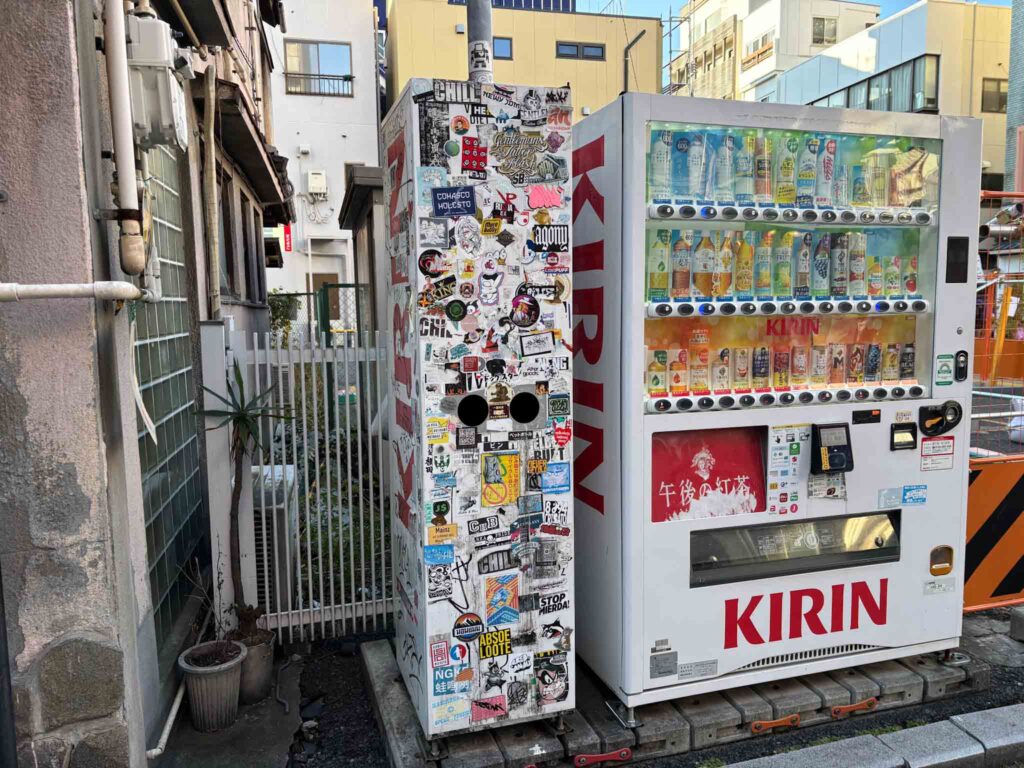
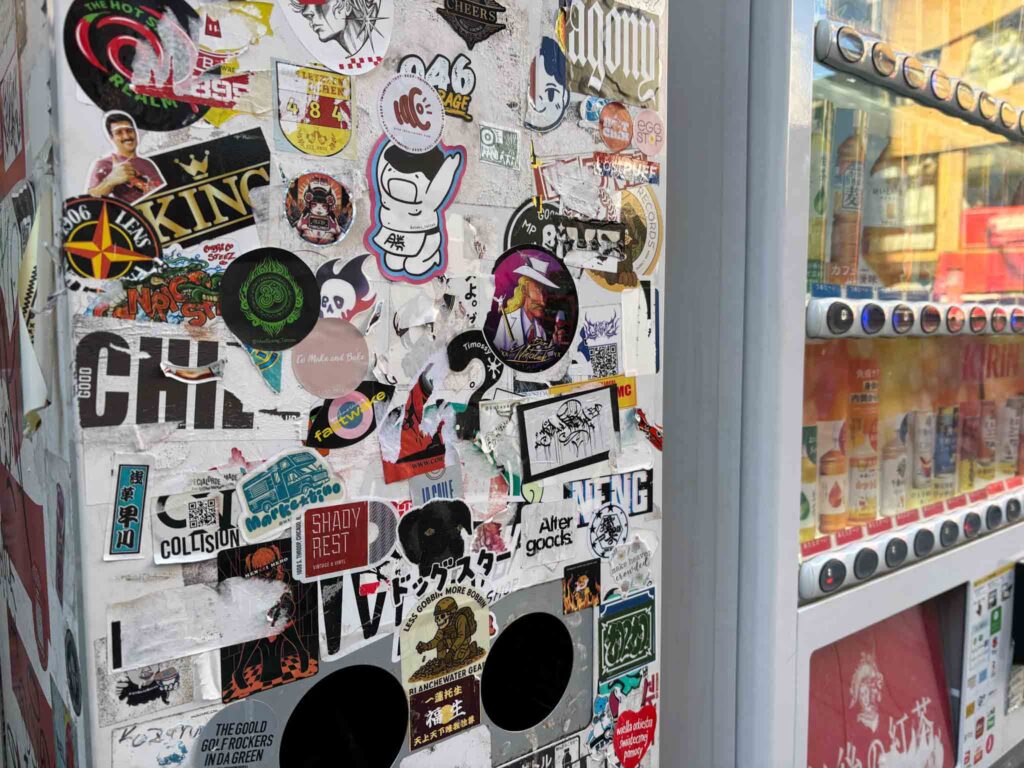
The next time I visited Asakusa was January 1, 2026.
That’s when I noticed something similar again.
A dedicated trash bin next to a vending machine
along Kannon Street was completely covered in stickers.
Here too?
I started wondering.
Are these stickers left as a kind of souvenir by visitors?
If this were a strictly prohibited act,
surely they would be removed.
Does that mean this is somehow tolerated?
Curious, I decided to look into it.
Asakusa’s Sticker Culture
According to what I found:
Asakusa has a traditional “sticker-like” culture called *Senjafuda*.
Since the Edo period, people have written their names or shop names
on small paper slips and pasted them on pillars or walls
of shrines and temples as a record of their visit.
I had no idea about this before.
So Asakusa has had a form of sticker culture for a very long time.
Thinking about it that way,
these stickers could be seen as proof that someone experienced
Japanese culture.
Perhaps they even represent a form of respect.
Of course, I don’t know the true intention behind each sticker.
But considering this background
completely changed how I see them.
In general, everything has a story behind it.
And once you learn that story,
your perspective can change entirely.
Through these stickers,
I gained a new piece of knowledge about Asakusa.
I hope to continue learning little by little,
and sharing what I see, feel, and discover
through this blog.
Omikuji at Sensoji Temple: How to Enjoy Japan’s Famous Fortune Slips
New Year’s Day Motuni in Asakusa: The Ultimate Winter Comfort Food
Seeing Asakusa from the Main Hall — A Moment That Changed How I See Japan
Why Japanese Capsule Toys (Gachapon) Are So Popular with Tourists in Asakusa